Pest control in Fairfield County, CT: ticks, mice or a nest at home?
Found a tick, a nest or mouse droppings at your Fairfield County home? Save any tick that bit someone and send it to the Connecticut Agricultural Experiment Station, which tests it free. For nests, droppings or bed bugs, start with the first-hour steps below, then check the pest calendar and your town’s page.
The first hour
- Tick bite: save the tick. Put it in a crush-proof container or a sealed plastic bag, dry, with no tape, water or alcohol. The Connecticut Agricultural Experiment Station (CAES) identifies and tests ticks for free; send it through your town health department or straight to the CAES lab. If a rash or fever follows within days to weeks, see your doctor; the tick guide shows what a tick bite infection looks like.
- Nest by the door: keep back. Keep people and pets away from it. Spraying single yellowjackets does not stop the colony, and CAES suggests a pest management professional for nests that are hard to reach, especially in buildings. Swelling of a whole limb, trouble breathing or hives all over after a sting need medical care right away.
- Droppings: air the room, then wet-clean. Open the doors and windows for 30 minutes and wear rubber or plastic gloves. Never sweep or vacuum droppings: spray them until very wet with a disinfectant or a bleach solution, let it soak for 5 minutes, then wipe up. Then look for where the mice get in.
- Suspected bed bugs: report it. Renters: tell your landlord promptly, because Connecticut law gives the landlord five business days to inspect, and keep infested furniture and belongings in the unit until treatment is done or the landlord agrees. Homeowners: ask a DEEP-registered pest control company to inspect.
Pest calendar
| Pest | Peak months | January | February | March | April | May | June | July | August | September | October (this month) | November | December |
|---|---|---|---|---|---|---|---|---|---|---|---|---|---|
| Blacklegged tick nymphs, 1 | May–Jul | none reported | none reported | none reported | none reported | peak | peak | peak | active | active | none reported | none reported | none reported |
| Blacklegged tick adults, 1 | Mar–Apr, Oct–Nov | active | active | peak | peak | active | none reported | none reported | none reported | none reported | peak | peak | active |
| Termite swarms, 2 | Mar–Jun | none reported | none reported | peak | peak | peak | peak | none reported | none reported | none reported | none reported | none reported | none reported |
| Carpenter ants, 3 | Apr–Jun | none reported | none reported | none reported | peak | peak | peak | active | active | active | active | none reported | none reported |
| Yellowjackets, 4 | Aug–Sep | none reported | none reported | none reported | active | active | active | active | peak | peak | active | none reported | none reported |
| Mosquitoes (West Nile virus risk), 5 | Jul–Sep | none reported | none reported | none reported | none reported | none reported | active | peak | peak | peak | active | none reported | none reported |
| Spotted lanternfly, 6 | Jul–Nov | none reported | none reported | none reported | active | active | active | peak | peak | peak | peak | peak | none reported |
| Stink bugs moving indoors, 7 | Sep–Nov | none reported | none reported | none reported | none reported | none reported | none reported | none reported | none reported | peak | peak | peak | none reported |
- Peak: the busiest months
- Active
- None reported
- October (this month)
Towns
- StamfordCity tick lab; Cove Island trap had 16 West Nile positives in 2025
- NorwalkFirst lone star tick population in CT; free city tick testing
- BridgeportOldest housing in the county; West Nile in all three city traps
- DanburyHighest Babesia share in the county's ticks, 28% in 2025
- Fairfield$5 town tick testing; Lyme share in ticks up from 25% to 36%
- GreenwichTown tick lab at $76; Civic Center trap had 12 West Nile positives in 2026
- SheltonNaugatuck Valley Health District; one Powassan-positive tick in 2025
- TrumbullMost 1950s and 1960s homes in the county; $5 tick drop box
- WestportMost ticks sent to CAES in the county, 277 in 2025; $10 district drop-off
- DarienBrush Island Road trap had 8 West Nile positives in 2025; stink bugs since 2010
Help by type of pest
- Tick controlSpraying your yard for ticks can be worth it in Fairfield County when the spray targets the lawn's edges, once in May or early June.
- Mouse and rodent controlMouse control in Fairfield County starts with sealing the gaps mice use, then snap traps set along walls, with baits as a later step.
- Termite controlTermite control in Fairfield County starts with finding eastern subterranean termites, which swarm March to June.
- Termite inspectionA termite inspection in Fairfield County is a visual check for wood destroying insects in accessible areas.
- Bed bugsBed bugs in Fairfield County are treated with heat, registered pesticides or both, plus vacuuming, encasements and follow-up checks over several weeks.
- Wasp and hornet nestsWasp, hornet and yellowjacket nests in Fairfield County peak in late summer, when CAES says a yellowjacket colony can hold 1,000 to 4,000 insects.
- Carpenter antsControl means finding the nest, fixing the leak or rot that drew them, then baiting or treating the colony.
- CockroachesFour cockroach species invade homes in the Northeast, CAES says, and the small German cockroach of kitchens and bathrooms can reach adulthood in six weeks.
- Commercial pest controlCommercial pest control in Fairfield County depends on the type of building.
Guides to costs, tick season and seasonal pests
- Carpenter ants vs termites in CT: how to tell them apartHow to tell carpenter ant and termite swarmers and damage apart
- Stink bugs and other fall invaders in Fairfield County, CTWhy stink bugs move indoors in fall and how to keep them out
- Pest control and exterminator cost in CT: sourced price rangesNational price ranges by pest from three dated cost guides
- Spiders, house centipedes, silverfish and camel crickets in CT homesWhich spiders can hurt you and why basement bugs gather where it is damp
- Spotted lanternfly in CT: quarantine, season and what to doThe statewide CAES quarantine and when eggs, nymphs and adults appear
- Tick season in Fairfield County, CT: tick and mosquito data by townWorst tick months, plus CAES tick and West Nile results for all 23 towns
How do you get a tick tested by CAES?
Connecticut residents can have a tick identified and tested by the Connecticut Agricultural Experiment Station (CAES) Tick Testing Laboratory in New Haven. According to the CAES submission instructions, there is no cost for identification or testing, though a town or local health department may charge a small fee for handling and mailing.
- Keep the tick. Place it in a container that cannot be crushed, or a sealed plastic bag. Do not tape it, add anything else to the package or put it in water or alcohol: ticks are sent in dry.
- Fill out the CAES Tick Submission Form from the same page and pack it with the tick.
- Send it through your town health department, which forwards ticks to CAES. If you can’t, mail it in a padded envelope (write “Please hand sort” on it) or drop it off at the Tick Testing Laboratory, 123 Huntington Street, New Haven.
- Wait for the email. Results come by email only, and phone calls slow the lab down.
CAES identifies every tick it receives but tests only blacklegged (deer) ticks that have fed on a person, for the agents of Lyme disease, anaplasmosis, babesiosis, hard tick relapsing fever and Powassan virus disease. Ticks from pets, larvae, unfed ticks and males are identified but not tested. Some towns run their own route or lab, so each town page names the office to use.
The numbers show why it is worth doing. In 2025 CAES received 5,896 ticks from across the state, and of the 3,975 blacklegged ticks it tested, 36.9% carried the bacterium that causes Lyme disease, according to its 2025 tick testing summary. A test result tells you what the tick carried, not whether you are infected, so talk to your doctor about the bite as well.
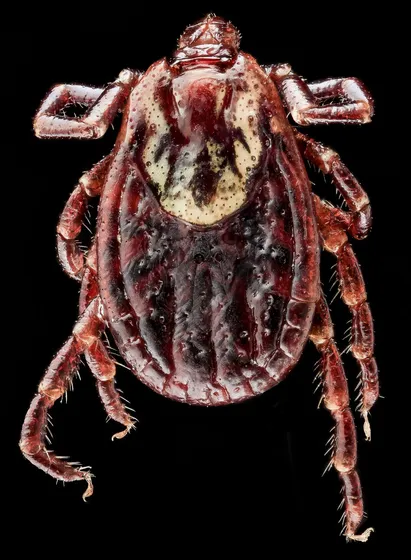

When is each pest active in Fairfield County?
The pest calendar on this page comes from CAES fact sheets and bulletins, one source per row. Blacklegged tick nymphs peak in May, June and July, adults are out in October and November and again in early spring, and they do not hibernate, so they can be active on warm winter days, according to the CAES Tick Management Handbook. Termites swarm “usually March – June”, according to the CAES termite fact sheet, while carpenter ants swarm from late spring into fall. Yellowjacket colonies grow all summer and are largest in late summer. Brown marmorated stink bugs, which CAES confirmed in Connecticut on December 2, 2010 from specimens that included Darien and Norwalk, seek shelter in homes in the fall; they do not bite or sting. The newer arrival is the spotted lanternfly: CAES says its adults are out from July to November; the spotted lanternfly guide covers the state’s rules and what to do with egg masses.
The calendar has no row for mice. No Connecticut agency source found for this guide says when they come indoors, so it does not guess.
What should you do about stings, nests and droppings?
Yellowjackets start a new nest every spring, and colonies grow to 1,000 to 4,000 insects by late summer, according to the CAES yellowjacket fact sheet. Nests are used for one season only. The fact sheet says spraying single yellowjackets will not control the rest, that yellowjackets flying inside in the fall may mean a nest in a nearby wall, and that a pest management professional can help with hard-to-reach nests, especially in buildings. It lists swelling of the limb, breathing difficulty and a rash or hives all over the body as reasons to seek medical attention immediately.
Mice. CT DEEP’s rodent page names the house mouse and the Norway rat as the most common rodent pests. House mice usually nest within 10 to 30 feet of their food, have up to 8 litters a year and breed every three to four weeks, so DEEP advises acting at the first sign and removing their food, water and shelter. To clean up, the CDC’s rodent clean-up steps say to air the space out for 30 minutes, wear rubber or plastic gloves, never sweep or vacuum, and soak droppings with a disinfectant or bleach solution for 5 minutes before wiping them up.
Bed bugs in rentals. Connecticut’s bed bug law, section 47a-7a, applies to every rental except a detached single-family home. The tenant reports, the landlord inspects within five business days and pays for inspection and treatment, and the tenant pays to prepare the unit. The renters and landlords section below has the details.
Squirrels, raccoons and bats are outside this guide. The pest control FAQ explains who handles them in Connecticut, and how to look up a pest control company’s DEEP registration before you hire one.
How much does pest control cost in Fairfield County, CT?
| Job | Range | Source |
|---|---|---|
| Average treatment for a standard infestation (national) | $171 | This Old House, March 2026 (national data) |
| Pest control visit (national range) | $50 to $500 | This Old House, March 2026 (national data) |
| Termite treatment (national range) | $250 to $1,000 | This Old House, March 2026 (national data) |
| Bed bug treatment (national range) | $1,000 to $4,000 | This Old House, March 2026 (national data) |
| Mice and rodents (national range) | $180 to $600 | This Old House, March 2026 (national data) |
| Wasps (national range) | $300 to $700 | This Old House, March 2026 (national data) |
| Cockroaches (national range) | $100 to $600 | This Old House, March 2026 (national data) |
| Ants (national range) | $100 to $500 | This Old House, March 2026 (national data) |
How to choose a pest control company in Fairfield County
- Ask for the company’s Connecticut DEEP pesticide business registration number. Every pesticide application business needs a DEEP certificate of registration, and under CGS 22a-66c(d) the number must appear on its written contracts, its vehicles, and its newspaper, billboard and directory ads. (CT DEEP, Pesticide Business Registration, June 2025)
- Ask who will decide on the treatment. An operational certificate “only allows the holder to use pesticides under the direction of a certified supervisor”, so the plan should come from a commercial supervisory applicator. (CT DEEP, Pesticide Certification, April 2022)
- Each place of business must employ a commercial supervisory applicator for each category of work it does. (Connecticut General Statutes, chapter 441)
- Before any pesticide goes down, the company must give you the product name, its EPA registration number, active ingredients and reentry information, and post signs for outdoor applications. (Connecticut General Statutes, chapter 441)
- Ask for a written plan that says what the pest is, where it is getting in and what non-chemical steps come first, and what a follow-up visit costs.
Renters and landlords: bed bugs in Connecticut rentals
- A tenant who knows or suspects bed bugs must tell the landlord promptly, and the landlord must inspect, or have a qualified inspector inspect, within five business days, along with any neighboring unit the landlord owns. The law covers every rental except a detached single-family home. (Connecticut General Statutes, section 47a-7a)
- If bed bugs are found, the landlord must take reasonable steps to treat them within five business days of the inspection and pays for the inspection and the treatment. The tenant pays to prepare the unit and must allow access. (Connecticut General Statutes, section 47a-7a)
- A landlord may not rent out a unit known or suspected to have bed bugs, must tell a prospective tenant about a current infestation in the unit or a neighboring unit, and on request must give the date it was last inspected and found free of them. (Connecticut General Statutes, section 47a-7a)
Sources
- CAES, Spotted lanternfly: https://portal.ct.gov/CAES-SLF
- CAES, Information on Submitting Ticks: https://portal.ct.gov/caes/tick-office/tick-office/information-on-submitting-ticks
- CAES, Summary of Tick Testing Results, 2025: https://portal.ct.gov/caes/-/media/caes/documents/tick_testing/summary-of-tick-testing-results-2025-readable-20.pdf
- CAES, Tick Management Handbook (Bulletin 1010): https://portal.ct.gov/-/media/caes/documents/publications/bulletins/b1010pdf
- CAES, Eastern subterranean termite fact sheet: https://portal.ct.gov/-/media/CAES/DOCUMENTS/Publications/Fact_Sheets/Entomology/Eastern_Subterranean_Termite_Reticulitermes.pdf
- CAES, Yellowjackets fact sheet: https://portal.ct.gov/-/media/caes/documents/publications/fact_sheets/entomology/yellowjackets_vespidae.pdf
- CAES, press release on the brown marmorated stink bug (December 2, 2010): https://portal.ct.gov/-/media/caes/documents/publications/press_releases/pressreleasenewagriculturalpestdecember22010pdf.pdf
- CT DEEP, Rat and Mouse Control: https://portal.ct.gov/DEEP/Pesticides/Integrated-Pest-Management/Rodent-Management
- CDC, How to Clean Up After Rodents (April 2024): https://www.cdc.gov/healthy-pets/rodent-control/clean-up.html
- Connecticut General Statutes, chapter 830 (section 47a-7a): https://www.cga.ct.gov/current/pub/chap_830.htm
How this guide is written
Fairfield County Pest Guide is independent, not a pest control company, and its local facts come from the Connecticut Agricultural Experiment Station, the Department of Public Health, the CDC, the US Census Bureau, town health departments and Connecticut statutes. How the guide is researched
Frequently asked questions
What's the worst month for ticks?
For blacklegged (deer) ticks in Connecticut, May, June and July, when the young nymphs peak, according to the CAES Tick Management Handbook. Adult ticks are active in October and November and again in March and April, and they do not hibernate, so they can bite on warm winter days too.
What type of mice do we have in Connecticut?
The house mouse is the one that gets indoors. CT DEEP names the house mouse and the Norway rat as the most common rodent pests. House mice normally live outdoors in fields and occasionally move into buildings, and their droppings are about 1/8 inch long and rod-shaped.
Are there stink bugs in Connecticut?
Yes. CAES confirmed the brown marmorated stink bug in Connecticut on December 2, 2010, from specimens found in towns including Darien and Norwalk. It seeks shelter in homes and other buildings in the fall and can be a nuisance, but it does not bite or sting people.
Is tick testing free in Connecticut?
The Connecticut Agricultural Experiment Station identifies and tests ticks at no cost for Connecticut residents, though a town or local health department may charge a small fee for handling and mailing. CAES tests only blacklegged ticks that have fed on a person, and it sends results by email.
Which towns does this guide cover?
Ten Fairfield County towns have their own pages: Stamford, Norwalk, Bridgeport, Danbury, Fairfield, Greenwich, Westport, Darien, Shelton and Trumbull. Each gives that town's CAES tick and mosquito results, the age of its housing and the health office to call. The tick season guide's table covers all 23 towns in the county.
How much does pest control cost in Fairfield County, CT?
No publisher prices pest control for Fairfield County or Connecticut, so this guide gives national ranges only. The cost table on this page lists This Old House figures for a single visit and for termites, bed bugs, mice, wasps, cockroaches and ants, and the pest control cost guide compares three national publishers pest by pest.