Pest control and exterminators in Shelton, CT
Shelton, CT is the one Fairfield County town in the Naugatuck Valley Health District, based in Seymour, which forwards a tick to CAES for $5. That is why the state’s 2025 table shows only 40 Shelton ticks: the ones residents mailed themselves. Of the 31 tested, 23% carried Lyme bacteria and one carried Powassan virus.
Found a tick or a nest right now?
- Tick bite: save the tick. Save it dry in a sealed bag; send it to CAES for free testing through your health department or by mail. See a doctor if a rash or fever follows. Naugatuck Valley Health District, 98 Bank Street, Seymour, sends it to CAES for $5; mailing it to CAES is free. details about tick drop-off in Shelton
- Nest by the door: keep back. Keep people and pets away from the nest; trouble breathing or hives all over need medical care right away.
- Droppings: air the room, then wet-clean. Air the room for 30 minutes, wear gloves and soak droppings with disinfectant or bleach before wiping; never sweep or vacuum them.
- Suspected bed bugs: report it. Renters tell the landlord, who has five business days to inspect; homeowners ask a DEEP-registered pest control company to inspect.
Hiring an exterminator in Shelton
- Check its DEEP registration.
- Get products, labels and notices in writing.
- Compare two written quotes.
- Shelton tenants with an unfixed pest or housing problem can call the Naugatuck Valley Health District at 203-881-3255 x 100; it handles the city's housing code complaints.
Pest control services in Shelton
Shelton’s first calls go out of town. Once a tick is off the skin, drop it, dry, into a sealed sandwich bag or a small hard container, jot down the date and the yard, trail or field involved, and drive it to the Naugatuck Valley Health District on Bank Street in Seymour. For $5 the district passes it to CAES, the state Agricultural Experiment Station’s tick lab, and then gets in touch with the result. Residents who would rather not make the trip can post it to New Haven themselves at no charge.
The same district office, not City Hall, answers housing code complaints, the route for a tenant whose landlord leaves a health or safety problem unfixed. City Hall still matters: the Building Department lists housing code inspections among its jobs, and the Fair Rent Commission hears tenants who think a rent increase was payback for a complaint.
Anyone paid to spray, bait or dust in Shelton must hold a state pesticide certificate and work for a firm on the business register kept by the Department of Energy and Environmental Protection (DEEP). CGS 22a-66c makes that firm print its registration number on contracts, trucks and print or directory advertising. No company is recommended or sold here; the about page explains how this guide is researched. Each pest guide below comes with a Shelton note:
- Tick control for Shelton yards: 64.2% of Shelton homes stand alone on their own lot, and in CAES field sampling, reported in its handbook on tick management, 82% of the ticks on lawns sat within 3 yards of the perimeter, along woods, stone walls or plantings.
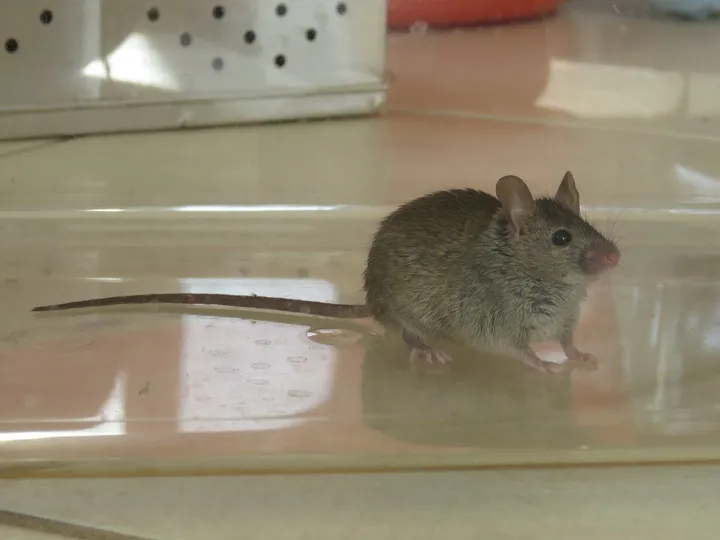
- Mouse control in Shelton condos, townhouses and houses: 12.2% of Shelton homes are attached single-family units, among the highest shares in the county, so one unit’s mice can become the next unit’s mice.
- Bed bugs in Shelton apartments and condos: 23.5% of occupied homes are rented, and in all but stand-alone single-family rentals, state law puts bed bug inspection on the landlord.
- Termite inspections for a Shelton home purchase and termite control around Shelton foundations: the median home dates from 1977, and almost half were built in 1980 or later, but 10.8% predate 1940.
- Carpenter ants in Shelton decks and window frames: these ants follow water-damaged wood, whatever the house’s age, and a side-by-side guide on telling carpenter ants from termites sorts out which swarmer is which.
- Wasp and hornet nests around Shelton homes: Shelton keeps no nest data; across Connecticut, yellowjackets build in soil, tree cavities, building walls or under any protected overhang, per the CAES yellowjacket fact sheet.
- Cockroach control in Shelton kitchens: no city figure exists, but CAES’s cockroach fact sheet notes they are capable of developing year-round inside, which matters most in shared buildings.
- Commercial pest control for Shelton offices, shops and apartment complexes: the health district’s sanitarians perform health inspections and enforce the State Public Health Code in all six district towns.
- Spotted lanternflies in Shelton: a countywide matter: CAES logged the first lanternflies in this county in 2020, and five years later every Connecticut county had them.
Nearby towns: Trumbull, next door to the west, where the town Health Department keeps a tick drop box; Bridgeport, whose median home dates from 1955; and Fairfield, which also forwards ticks for $5.
Costs, choosing a company and rentals
Average treatment for a standard infestation (national): $171 (This Old House, March 2026).
Pest calendar
| Pest | Peak months | January | February | March | April | May | June | July | August | September | October (this month) | November | December |
|---|---|---|---|---|---|---|---|---|---|---|---|---|---|
| Blacklegged tick nymphs, 1 | May–Jul | none reported | none reported | none reported | none reported | peak | peak | peak | active | active | none reported | none reported | none reported |
| Blacklegged tick adults, 1 | Mar–Apr, Oct–Nov | active | active | peak | peak | active | none reported | none reported | none reported | none reported | peak | peak | active |
| Mosquitoes (West Nile virus risk), 2 | Jul–Sep | none reported | none reported | none reported | none reported | none reported | active | peak | peak | peak | active | none reported | none reported |
- Peak: the busiest months
- Active
- None reported
- October (this month)
Why pests in Shelton follow the valley health district
Why does the state’s tick table show so few Shelton ticks?
Because Shelton’s row leaves out the ticks residents hand to the health district. The CAES 2025 summary lists Seymour beside Shelton as its “Health District Town” and explains that ticks a district forwards are counted under the town where the district is based. The Naugatuck Valley Health District covers Ansonia, Beacon Falls, Derby, Naugatuck, Seymour and Shelton, about 130,441 people, and it formed in January 1972 when Ansonia, Derby, Shelton and Seymour joined. So the 40 Shelton ticks are individual submissions, and Seymour’s 47 include the ticks forwarded from all six towns. Next door, Trumbull, which runs its own health department, logged 161. The gap says more about which door a tick goes through than about how many ticks live in Shelton’s woods.
Should a Shelton resident worry about the Powassan-positive tick?
It is worth knowing about, not a reason for alarm. One of the 31 Shelton ticks CAES tested in 2025 carried Powassan virus, and the 2025 tick summary found it in only 13 of the 3,975 blacklegged ticks tested statewide, 0.3%. Five other towns in the county had a Powassan-positive tick that year, including Stamford and Ridgefield with two each. The same Shelton ticks carried Anaplasma in 3 cases and Babesia in 1, and 7 carried the Lyme bacterium. Powassan virus disease is on the list of tick-borne illnesses the state health department tracks, as the district’s tick-borne disease page notes, alongside Lyme, anaplasmosis and babesiosis. One positive tick tells you the virus circulates locally; it says nothing about any one bite. Tell a doctor about fever or headache after a bite.
Do Shelton’s condos and townhouses change how mice and bed bugs spread?
They can, because neighbors share walls, attics and pipe runs. Census housing counts by building type put 12.2% of Shelton’s 16,927 homes in attached single-family buildings, third among all 23 county towns, and 6.9% in buildings of 50 or more units. House mice keep their nests 10 to 30 feet from what they eat, raise up to 8 litters a year and settle behind walls and in cabinets, according to DEEP’s guidance on rodents. The same page lists steel wool, cement, sheet-metal flashing and quarter-inch hardware cloth for closing the gaps where pipes and vents pass through. For bed bugs, CGS 47a-7a makes a landlord inspect the unit and any contiguous unit the landlord owns within five business days of notice. The law covers rentals; in an owner-occupied condo, tell the association early, since bugs can move between units.

Are termites a concern in Shelton’s newer homes?
They can reach a Shelton house of any age if its wood touches or nearly touches soil. Census construction-decade figures show 46.5% of Shelton homes went up in 1980 or later, a share topped only by Monroe’s among the 23 county towns, and the median year built is 1977. Still, 10.8% predate 1940, and the wood around a newer house can be just as exposed: the CAES termite fact sheet asks owners to raise wood at least 6 inches off the ground, keep mulch thin and off the siding, and put metal flashing where a wooden deck meets the house. CAES dates the swarms to March through June in most years. Carpenter ants, by contrast, “cannot excavate undamaged wood”, per the CAES carpenter ant sheet, so finding them means looking for a leak.
Who handles a housing code complaint in a Shelton rental?
The health district does, with City Hall in a supporting role. The district’s Environmental Health page says it “responds to housing code health and safety violations filed by residents in all towns within our district”, and that investigations “may result in the issuance of violation orders and/or litigation”. Complaints start with a call to the district. Shelton’s Building Department lists housing code inspections among its duties. And the city’s Fair Rent Commission hears tenants who believe a rent increase came in retaliation for a repair request or a “health, safety or housing code inquiry or complaint to the City”; its investigation may include an on-site inspection by the Fire Marshal or Building Official. With 23.5% of Shelton homes rented, per Census owner and renter figures, that route matters to roughly one household in four.
Ticks and mosquitoes in Shelton
Shelton residents mailed CAES 40 blacklegged ticks themselves in 2025, up from 21 in 2024. CAES tested 31 of the 2025 ticks and found the Lyme bacterium in 7 (23%), a share only Darien undercut among all 23 county towns, as its 2025 tick report shows; a year earlier the 2024 tick report had 7 positives among 18 tested (39%). Samples this small swing easily, and none of these counts include ticks given to the health district, which go into Seymour’s row. Illness is tallied by region, and Shelton sits in the Naugatuck Valley planning region: CDC’s public Lyme case data count 337 cases there for 2023.
The city’s single CAES mosquito trap stands on Shelton Avenue. Every one of the 4,008 mosquitoes tested from it in 2025 came back negative, according to the season’s closing report. This year was different: West Nile virus turned up in 3 samples, caught August 25, September 10 and September 21, out of 5,140 mosquitoes tested through October 13, according to the 2026 cumulative results. Each positive is one tested batch from one site. The tick season guide compares Shelton with the other 22 towns, and its CSV of every town is free to download.
Exterminator prices and registration checks for Shelton
How much does a local exterminator cost in Shelton?
There is no Shelton or Connecticut price survey, so every published figure is national. Fixr’s estimate for one service call runs $158 to $288 and averages $223 (national data, as of January 2025). This Old House lists $50 to $500 per appointment and $180 to $600 for mice and other rodents (national data, as of March 2026). The two publishers measure differently, so hold each quote against one of them, not a blend. Our Connecticut cost guide sets out the other ranges.
What should a Shelton condo association ask a pest company for?
Two numbers and a list of products. First, the firm’s state registration number, printed on its contracts and ads under section 22a-66c and searchable by anyone on DEEP’s look-up page. Second, the supervisor’s certification: DEEP’s category list files household pests such as cockroaches, bed bugs and ants under 7A General Pest Control and rats and mice under 7D Rodent Pest Control. Third, a written list from the company, before it agrees to treat, naming each product with its EPA registration number and when people may go back in; section 22a-66a requires it for both the requester and the property manager.
Offices to call in Shelton
- Naugatuck Valley Health District: 98 Bank Street, Seymour, CT 06483; 203-881-3255. Open Monday to Thursday 8 am to 4 pm and Friday 8 am to 1 pm. General complaints: 203-881-3255 x 100.
- Tick submissions: bring the tick to the district in a sealed bag or container; the fee is $5 per tick and the district contacts you with the result, as its Environmental Health page explains. No tape, glass or liquid.
- Shelton Building Department: City Hall, 54 Hill Street, Third Floor, Shelton, CT 06484; 203-924-1555 ext. 1517.
- Shelton Fair Rent Commission: 203-924-1555 ext. 1373 or [email protected]; written complaints go to the City Clerk’s Office, 54 Hill Street, First Floor.
- CAES’s New Haven tick lab: no charge when you post the tick yourself or hand it in at 123 Huntington Street; the lab’s instructions for sending ticks say which ones qualify. Neighbors in Derby or Monroe can look up their own office with the state’s health agency directory.
Sources
- Connecticut Agricultural Experiment Station, Summary of Tick Testing for 2025 (Shelton and Seymour rows)
- Naugatuck Valley Health District: Environmental Health, with tick submissions and housing code enforcement
- Connecticut General Statutes chapter 441, pesticide control
- Connecticut Agricultural Experiment Station: spotted lanternfly page
- Naugatuck Valley Health District: about the district and its six towns
- Naugatuck Valley Health District: tick-borne disease information
- American Community Survey 2020-2024, table B25024 (Shelton building types)
- Connecticut DEEP: integrated pest management for rats and mice
- Connecticut General Statutes chapter 830, landlord and tenant
- American Community Survey 2020-2024, table B25034 (Shelton construction decades)
- American Community Survey 2020-2024, table B25035 (median construction year by town)
- Connecticut Agricultural Experiment Station, Bulletin 1010 on managing ticks
- Connecticut Agricultural Experiment Station, yellowjacket fact sheet
- Connecticut Agricultural Experiment Station, cockroach fact sheet
- Connecticut Agricultural Experiment Station, eastern subterranean termite fact sheet
- Connecticut Agricultural Experiment Station, carpenter ant fact sheet
- City of Shelton: Building Department
- City of Shelton: Fair Rent Commission questions and answers
- American Community Survey 2020-2024, table B25003 (Shelton owners and renters)
- Connecticut Agricultural Experiment Station, Summary of Tick Testing for 2024 (Shelton row)
- Centers for Disease Control and Prevention, Lyme disease public-use data by planning region
- Connecticut Agricultural Experiment Station, mosquito trapping locations 2020-2026
- Connecticut Agricultural Experiment Station, final mosquito results for 2025
- Connecticut Agricultural Experiment Station, mosquito results updated October 13, 2026
- Fixr, What It Costs To Hire An Exterminator (national figures)
- This Old House, How Much Pest Control Costs (national figures)
- Connecticut DEEP: pesticide registration and certification look-up
- Connecticut DEEP: commercial applicator category descriptions
- Naugatuck Valley Health District: address, phone and hours
- Connecticut Agricultural Experiment Station: how to submit a tick
- Connecticut Department of Public Health: local health agency directory
Frequently asked questions
How much does a local exterminator cost?
Nobody publishes Shelton or Connecticut prices, so expect national numbers. Fixr's range for one service call is $158 to $288, averaging $223 nationally (as of January 2025). This Old House says $50 to $500 per appointment, with $171 typical for a standard infestation (as of March 2026). Ask each company for its price in writing.
What's the worst month for ticks?
Nymphs, the tiny blacklegged ticks behind most Lyme infections, peak in May, June and July, says the CAES handbook on tick management. Adults return in the fall and stay active on warm winter days. A Shelton resident who finds one attached can have it tested through the valley health district in Seymour for $5.
Where do I take a tick in Shelton, CT?
Shelton is served by the Naugatuck Valley Health District at 98 Bank Street in Seymour. It sends each tick on to CAES for $5 and gets back to you with the result. Carry the tick in a sealed bag or crush-proof container, never taped. Mailing it to the New Haven lab with the CAES form costs nothing.
Can a Shelton landlord raise the rent because I complained about pests?
A rent increase that looks like retaliation is grounds for a complaint to Shelton's Fair Rent Commission. Its own page lists a rent increase after a repair request or a health, safety or housing code complaint to the city as a reason to file. The written form goes to the City Clerk at 54 Hill Street.