Pest control and exterminators in Danbury, CT
Danbury, CT ticks carried Babesia more often than any other town’s in the county: 28% of the 53 tested in 2025, with 36% Lyme-positive. Keep any tick that bites you and ask the city health department about sending it to CAES. For pests in a rental, the city’s Housing Program inspects when a landlord does not respond.
Found a tick or a nest right now?
- Tick bite: save the tick. Save it dry in a sealed bag; send it to CAES for free testing through your health department or by mail. See a doctor if a rash or fever follows. Mail the tick to the CAES lab in New Haven or drop it off there, free; ask the city health department about a local route. details about tick drop-off in Danbury
- Nest by the door: keep back. Keep people and pets away from the nest; trouble breathing or hives all over need medical care right away.
- Droppings: air the room, then wet-clean. Air the room for 30 minutes, wear gloves and soak droppings with disinfectant or bleach before wiping; never sweep or vacuum them.
- Suspected bed bugs: report it. Renters tell the landlord, who has five business days to inspect; homeowners ask a DEEP-registered pest control company to inspect.
Hiring an exterminator in Danbury
- Check its DEEP registration.
- Get products, labels and notices in writing.
- Compare two written quotes.
- Renting in Danbury? If the landlord ignores a pest complaint, the city's Housing Program lets you request an inspection of the unit.
Pest control services in Danbury
For a tick bite in Danbury, the first steps are the same as anywhere in Connecticut, but the local numbers make them worth doing. Remove the tick, keep it dry in a sealed bag, write down the date, and send it to the Connecticut Agricultural Experiment Station (CAES) for testing, either yourself by mail or through the Department of Health and Human Services, whose Community Health division names tick-borne disease management as one of its programs. Call the department first to ask how it handles submissions.
For pests in a rental, Danbury spells out a route for tenants. Ask the landlord in writing; if the landlord does not respond, the city’s Housing Program lets you request an inspection of the unit. Rodent and garbage complaints go to Environmental Health. Both are at City Hall on Deer Hill Avenue.
Any pesticide work for hire needs a certified applicator employed by a business registered with DEEP, and the registration number appears on the company’s written contracts, vehicles and newspaper, billboard and directory ads under CGS 22a-66c. Nothing here is a referral; the about page covers who writes this guide and how. The service guides, with a Danbury note for each:
- Tick control for Danbury yards: 41.0% of Danbury’s housing units are detached houses, many with a lawn that meets brush or stone walls, the edge strip CAES’s handbook tells owners to keep clear.
- Mouse control for Danbury houses: rodent complaints go to the city’s Environmental Health division, which names rodents and garbage among the problems it handles.
- Termite inspection when buying in Danbury and termite control for Danbury homes: the median Danbury home dates from 1975, newer than every town page here except Shelton’s, yet 30.4% still predate 1960.
- Carpenter ants in Danbury homes: a sign of wet wood rather than old wood, and the guide to telling carpenter ants from termites settles which swarmer you have.
- Bed bugs in Danbury apartments: 46.2% of occupied homes are rented, the third-highest share in the county after Bridgeport and Stamford, and the city’s Housing Program inspects when a landlord does not respond.
- Cockroach control in Danbury kitchens: the city keeps no cockroach record, so the guide relies on CAES’s statewide sheet: indoors, cockroaches can develop year-round.
- Wasp and hornet nests around Danbury houses: no Danbury data exist; statewide, CAES says yellowjackets nest in the ground, in wall voids and under decks, and each nest lasts one season.
- Commercial pest control for Danbury businesses and apartment buildings: Environmental Health also runs the certificate of apartment occupancy inspections that owners of larger buildings need.
- Spotted lanternflies in Danbury: a county-wide fact, not a city one: CAES first recorded them in Fairfield County in 2020, and by 2025 in every Connecticut county.
Nearby towns: toward the coast, Norwalk, home of the state’s first lone star tick colony, and Westport, the largest tick sender of the county’s 23 towns; and for renters, the two cities with even more rented homes, Bridgeport and Stamford.
Costs, choosing a company and rentals
Average treatment for a standard infestation (national): $171 (This Old House, March 2026).
Pest calendar
| Pest | Peak months | January | February | March | April | May | June | July | August | September | October (this month) | November | December |
|---|---|---|---|---|---|---|---|---|---|---|---|---|---|
| Blacklegged tick nymphs, 1 | May–Jul | none reported | none reported | none reported | none reported | peak | peak | peak | active | active | none reported | none reported | none reported |
| Blacklegged tick adults, 1 | Mar–Apr, Oct–Nov | active | active | peak | peak | active | none reported | none reported | none reported | none reported | peak | peak | active |
| Mosquitoes (West Nile virus risk), 2 | Jul–Sep | none reported | none reported | none reported | none reported | none reported | active | peak | peak | peak | active | none reported | none reported |
- Peak: the busiest months
- Active
- None reported
- October (this month)
Why pests in Danbury raise Babesia and tenant questions
Why do so many Danbury ticks test positive for Babesia?
Danbury’s 2025 Babesia share was the highest of the 23 towns in Fairfield County, as the county tick table shows, and no published source explains why. CAES found Babesia in 15 of the 53 Danbury ticks it tested (28%), according to its 2025 tick testing summary. Statewide, the same summary puts Babesia at 14.8% of tested blacklegged ticks, so Danbury’s rate was close to double. The Danbury ticks also carried Anaplasma, the agent of anaplasmosis, in 7 cases (13%) and Borrelia miyamotoi in 3 (6%). Babesia, the parasite behind babesiosis, travels in the same blacklegged tick as the Lyme bacterium. Fifty-three ticks is a modest sample, and they are ticks residents chose to send in, so the share can move a lot from one year to the next. The practical point does not change: keep any tick that bit someone and send it in.
Are termites less of a worry in Danbury’s newer homes?
Somewhat, but newer is not immune. Danbury’s median year built is 1975, the second-newest of the 10 towns with pages in this guide after Shelton’s 1977, and only 14.9% of its homes predate 1940, by the Census Bureau’s year-built counts. That still leaves 30.4% built before 1960. The CAES termite fact sheet calls the eastern subterranean termite the most frequently encountered termite in New England and says a colony excavates about one square foot of wood a year, so “Immediate or hasty action is not required.” It suggests interviewing several professionals and discarding extremely high or low quotes. For a home sale, the NPMA-33 form used for FHA and VA loans is a visual inspection, and the report is invalid for a mortgage if not used within 90 days.
What can a Danbury tenant do when a landlord ignores pests?
Ask the city for an inspection. Danbury’s Housing Program says a tenant may request an inspection of their rental unit if the landlord fails to respond, and it requires a Certificate of Apartment Occupancy when occupancy or ownership of a 3-family or larger home changes. The city’s Environmental Health division responds to complaints that “can involve issues such as rodents, garbage, and various neighborhood health concerns” and carries out the apartment occupancy inspections. That matters in a city where 46.2% of occupied homes are rented, by the Census Bureau’s tenure count, and only 41.0% of housing units are detached houses. For bed bugs, the state law, CGS 47a-7a, sets the landlord’s five-business-day deadline to inspect, and the landlord pays for inspection and treatment; the tenant pays to prepare the unit.
Do mice carry ticks into Danbury houses?
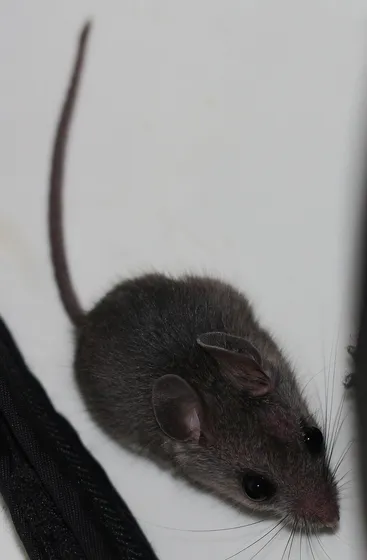
Not in the season when they come indoors. The CAES Tick Management Handbook describes white-footed mice as woodland and brush animals that nest in stone walls, tree cavities, stumps, logs and stacked firewood, usually at 1 to 10 per acre, and says they “may readily enter and nest in buildings, especially during the winter months.” It adds that there are no ticks on the mice in winter and that inside buildings they do not pose a Lyme risk. Outdoors is another matter: the mice breed from spring through fall, and they are hosts for young ticks, which is why the handbook’s host-targeted methods aim at them. Indoors, the handbook’s concern is cleanup, since sweeping up droppings in a confined space can expose people to hantavirus; the state health department calls Connecticut’s hantavirus risk low, with one reported case since 1995, in a 2026 memo. Folded 1/4-inch hardware cloth over openings keeps the mice out.

Where in a Danbury yard are ticks most likely?
At the edges, not in the middle of the lawn. With 41.0% of Danbury’s housing units detached single-family houses, by the Census Bureau’s units-in-structure count, many households have a yard backing onto brush or woods. In CAES field sampling reported in the Tick Management Handbook, two-thirds of blacklegged ticks (67%) came from dense woods and another 22% from the unkept strip where woods meet open ground; ornamental plantings held 9% and lawns just 2%. The handbook’s low-cost steps follow from that: keep leaf litter and brush cleared at the woods’ edge and along stone walls, set swing sets and sandboxes back from the trees, and lay a border of wood chips or gravel at least 3 feet wide between lawn and woods. Deer fencing is the most effective way to keep deer off a property, it says, though it does not stop mice.
Ticks and mosquitoes in Danbury
Danbury residents sent CAES 79 blacklegged ticks in 2025, up from 52 in 2024. Of the 53 tested in 2025, 19 (36%) carried the Lyme bacterium, according to the 2025 summary; in 2024, 14 of 43 tested (33%) were positive, per the 2024 summary. Unlike Stamford and Norwalk, where the Lyme share roughly doubled between the two years, Danbury’s stayed in the same range. Submissions reflect who mailed ticks, not how many live in Danbury’s woods. People’s illnesses are tallied regionally: Danbury falls in the Western Connecticut planning region, where CDC’s Lyme dataset lists 534 cases for 2023.
CAES has one mosquito trap in Danbury, on Reservoir Road. It produced 2 West Nile virus-positive samples in 2025, per the 2025 final summary, and 3 by October 13, 2026, per the 2026 summary. Those are pooled catches from a single site, not a citywide reading. Trapping runs from June to late October, and the CAES mosquito brochure flags July, August and September as the months people are most likely to be infected. Danbury’s figures sit in one row of the downloadable table, explained in the tick season guide.
Exterminator prices and registration checks for Danbury
What does a tick spray or pest inspection cost in Danbury?
Danbury has no published price list, and neither does Connecticut; the figures that exist are national. Bob Vila gives $150 to $300 for ticks and about $65 to $135 for a general pest inspection, with termite or other wood-destroying insect inspections at $100 to $290 (national data, as of September 2024). Fees for a visit vary with the pest, the size of the house and how often someone comes back. Read the cost guide for the publishers’ other ranges.
Who should actually decide on the treatment at a Danbury house?
A commercial supervisory applicator should. Under CGS 22a-66f, each place of business must employ a supervisory applicator certified for each category of work it does, and DEEP’s certification page says an operator certificate “only allows the holder to use pesticides under the direction of a certified supervisor.” So ask a Danbury firm who wrote the plan, and check its DEEP registration number on the state’s eLicense lookup.
Offices to call in Danbury
- Department of Health and Human Services: City Hall, 155 Deer Hill Ave, Danbury, CT 06810; 203-797-4625. If you live just over the city line, the state health department’s local health agency finder lists the office for your town.
- Community Health: the division whose programs include “tick-borne disease management”. Ask here how the city handles tick submissions.
- Environmental Health: complaints involving rodents, garbage and neighborhood health concerns, and certificate of apartment occupancy inspections.
- Housing Program: tenant requests for an inspection when a landlord does not respond.
- CAES Tick Testing Laboratory: free, by mail or drop-off in New Haven. Its submission page explains which Danbury ticks qualify (blacklegged, and fed on a person) and how to pack one.
Sources
- CAES spotted lanternfly
- Bob Vila, pest control cost (national)
- CT DEEP, pesticide certification
- CGS chapter 441
- CAES ticks 2025, Danbury row
- Census median year built
- Census year built (B25034)
- CAES termites
- NPMA-33 form (HUD)
- City of Danbury, Housing Program
- City of Danbury, Environmental Health
- Census tenure (B25003)
- CGS chapter 830
- CAES Tick Handbook
- DPH hantavirus memo (2026)
- Census units (B25024)
- CAES ticks 2024, Danbury row
- CDC Lyme data
- CAES trap list (Danbury)
- CAES mosquitoes 2025, Danbury traps
- CAES mosquitoes 2026, Danbury traps
- CAES mosquito brochure
- City of Danbury, Department of Health and Human Services
- DPH, find your local health agency
- City of Danbury, Community Health
- CAES tick submissions
Frequently asked questions
Is your house ruined if you have termites?
Rarely. The CAES termite fact sheet says immediate or hasty action is not required, because a colony excavates an average of one square foot of wood a year. Danbury's median home dates from 1975, the second-newest of the 10 towns this guide covers, but any house with wood near soil can have termites, so get several quotes.
Do Danbury ticks carry babesiosis?
Some do. In 2025 CAES found Babesia, the parasite that causes babesiosis, in 15 of the 53 Danbury ticks it tested (28%), the highest share of all 23 towns in Fairfield County. A positive tick does not mean the person bitten is infected; tell a doctor about fever or fatigue after a bite.
How do I get Danbury to inspect my apartment for pests?
Write to your landlord first. If the landlord does not respond, Danbury's Housing Program lets a tenant request an inspection of the rental unit, and the Environmental Health division takes complaints involving rodents and garbage. Both are part of the Department of Health and Human Services at City Hall, 155 Deer Hill Ave, 203-797-4625.
Can mice bring ticks into a Danbury house in winter?
Not in winter. The CAES Tick Management Handbook says white-footed mice may enter and nest in buildings, especially in winter, but there are no ticks on the mice then, and inside buildings they do not pose a Lyme risk. The tick risk is outdoors, from spring through fall, where mice host young ticks.