Stink bugs and other fall invaders in Fairfield County, CT
Brown marmorated stink bugs are a fall invader with local roots in Fairfield County: CAES confirmed them in Connecticut in 2010 from specimens that included Darien and Norwalk. They move indoors in the fall to wait out winter, and they don’t bite, sting or breed inside. Sealing cracks, screens and attic vents before fall keeps most out.
The same cooling weather brings a few other pests to the door, or makes them easier to notice: mice, yellowjackets in the walls, adult ticks and spotted lanternflies. This guide covers each in turn, with what the Connecticut sources say to do.
Pest calendar
| Pest | Peak months | January | February | March | April | May | June | July | August | September | October (this month) | November | December |
|---|---|---|---|---|---|---|---|---|---|---|---|---|---|
| Stink bugs moving indoors, 1 | Sep–Nov | none reported | none reported | none reported | none reported | none reported | none reported | none reported | none reported | peak | peak | peak | none reported |
- Peak: the busiest months
- Active
- None reported
- October (this month)
Are there stink bugs in Connecticut?
Yes. On December 2, 2010, the Connecticut Agricultural Experiment Station announced that its entomologists had confirmed the brown marmorated stink bug in the state. According to the CAES press release, single specimens had been collected by residents in Cheshire, Darien, Hamden, New London, North Haven, Norwalk, West Haven and Windham. At the time CAES said populations were “currently very low but are expected to rise in the state over the next few years.”
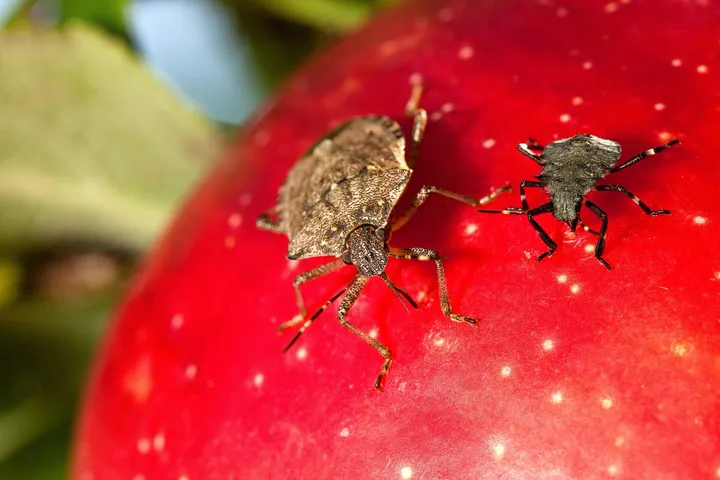
The insect is from Asia. CAES describes the adult as “less than three-quarters of an inch.” It is a pest of fruits and vegetables, from corn and tomatoes to apples and peaches. CAES says “The white bands on the antennae distinguish this pest from other northeastern stink bugs.” Two of the first towns on that list have pages in this guide: pests in Darien and pests in Norwalk.
Why do stink bugs come inside in the fall?
To spend the winter somewhere sheltered. The 2010 CAES release says the bugs “will seek shelter in homes and other buildings during the fall and can be a nuisance.” It adds that “they do not bite or sting people.”
UConn Extension’s answer to “What is that brown bug in my house?”, from Carol Quish of the UConn Home and Garden Education Office, explains the routes and the behavior. They “come into homes in the fall to spend the winter in a resting state,” entering “through attic vents, cracks and crevices, down chimneys” and under siding. Once inside, “They do not damage, nor do they eat or mate or lay eggs.” Quish adds: “We heat and light our houses, which sends artificial environmental signals to the bugs to come out of their winter slumber.” So they turn up crawling on windows and lamps in the middle of winter.
That last point surprises people: stink bugs seen in January usually got in during the fall, not that week.
How do you keep stink bugs out?
Block the routes before they move in. The UConn advice is short: “seal cracks and crevices, secure window screens and weather stripping around doors and windows. Screen attic vents, too.”
A practical fall checklist built on that advice:
- Walk the outside of the house and caulk gaps where siding meets trim, around window and door frames, and where pipes, cables and vents pass through the walls.
- Repair or replace torn window screens, and check the screens on attic and soffit vents.
- Fit weather stripping to doors and windows that let in light around the edges.
- Check the chimney, one of the entry routes UConn names.
Timing matters. UConn’s brown marmorated stink bug fact sheet says that “During late September and October, the adults begin searching for overwintering sites, often congregating in large numbers on buildings.” The time to seal is before late September.
The same sheet adds the gaps it wants closed: “all cracks and openings around windows, doors, siding, pipes, chimneys and other openings,” plus any “tears or holes in screens.” Outdoor insecticides labeled for stink bugs “may offer minor relief, but the effect may be short-lived,” it says. Anyone applying them for hire must hold a DEEP certificate under CGS 22a-54.
How do you tell the fall invaders apart?
Stink bugs are rarely alone. UConn notes that they “may accidentally end up indoors, much like the Asian ladybeetle, the western conifer seed bug or the boxelder bug.” Cluster flies come in at the same time of year. The five differ in how they look and in the best way to deal with them.
| Insect | What it looks like | Bite or damage? | What to do indoors |
|---|---|---|---|
| Brown marmorated stink bug | About 17 mm, mottled brown, “alternating dark and light bands on the antennae and on the edges of the abdomen” (UConn) | Does not bite or sting (CAES); smells when disturbed | Vacuum or soapy water |
| Western conifer seed bug | “Up to one inch,” with “the flattened, leaf-like flare on the lower portion of the back legs” (UConn) | “They do not injure houseplants or bite humans” | Catch it and put it outside; it smells if crushed |
| Boxelder bug | “About 1/2” long, dark brown to black with conspicuous red markings” (UConn) | Biting “is apparently very rare”; can spot curtains and walls | Daily vacuuming, bag emptied promptly |
| Asian lady beetle | Usually about 1/4 inch, most often mustard to red; can have a white mark with a black “m” behind the head (UConn) | Handled beetles leave a fluid that can stain and “can sometimes cause an allergic reaction” | Sweep up or vacuum, then seal and discard the bag |
| Cluster fly | “Slightly less than ½ inch long, dark gray, with a checkered back” (UConn) | Larvae live on earthworms, so they are “not as much of a health hazard as are house flies” | Seal entry points; remove dead flies |
How to get rid of stink bugs and other fall invaders already inside
Stink bugs
Remove them, don’t spray them. UConn says “Control of the brown marmorated stink bug in homes consists of preventing entry and removal of insects using a vacuum cleaner,” and that “Indoor insecticides are not recommended.”
- Vacuum them up, then empty the canister or seal and throw out the bag at once. UConn says disposing of the bag avoids “a lingering odor.”
- Or drop them into soapy water. “They can also be drowned in a bucket of soapy water,” the fact sheet says.
- Don’t crush them. CAES says that “if disturbed, they will release a liquid which creates a pungent odor,” so crushing them on a curtain is a mistake.
- Expect a few on warm days all winter. Because they don’t breed indoors, the number inside won’t grow; the ones you see moved in during the fall.
Boxelder bugs
Vacuum them daily. UConn’s boxelder bug fact sheet says “Indoor control can be had by daily vacuuming and prompt disposal of the contents of the cleaner bag.” Like stink bugs, they “produce a foul odor when crushed,” and they can spot curtains and walls.
They build up where “seed-bearing or female boxelder trees” grow. They gather on the sunny sides of buildings in fall, late winter and early spring. UConn calls removing nearby female boxelder trees “the most satisfactory and permanent method of control,” though the trees may not be on your land. To keep them out, it suggests caulking around lower window and door frames and other gaps “within about three feet of the ground.” Outdoor sprays are a poor bet: the sheet says boxelder bugs “are difficult to control outdoors with insecticides under any circumstances.”
Western conifer seed bugs
Catch them and put them outside. UConn’s leaf-footed bug fact sheet says “Control of leaf-footed bugs is not necessary.” They “are easy to catch because of their slowing metabolism,” and “Once caught, they can be tossed outdoors.” Handle them quickly: “If held too long or crushed, they emit a foul odor.”
The bug was “first identified in Connecticut in 1985,” UConn says. It comes indoors “in late summer and early fall looking for a warm crevice to spend the winter.” It does not bite people or harm houseplants.
Cluster flies
Seal the gaps they use. UConn’s cluster fly fact sheet says “Control of cluster flies usually depends on preventing the flies from entering buildings.” Openings around window sills and screens “should be sealed with caulking compound or another appropriate sealer.”
They start looking for shelter “as outdoor temperatures drop through the mid 50’s.” They gather in wall voids, window frames and attics, where “They often rest in clusters numbering in the thousands.” To find where they get in, UConn suggests watching “the side of the house where the sun is shining in late afternoon on autumn days.” Clear away dead flies “to avoid infestation of other insects (such as larder beetles).” Lawn and garden sprays against them “are not effective,” the sheet says.
Asian lady beetles
Sweep or vacuum them up, then seal and discard the bag. Lady beetles move in once “the first killing frost hits in autumn,” according to UConn’s Asian lady beetle fact sheet. They cluster “in hundreds or thousands” on light-colored, sunny, southwest-facing walls. UConn recommends screens of “20 mesh maximum” on windows, doors and exhaust vents. It also admits “There is no perfect method to get rid of lady beetles that make their way indoors.”
Which other pests come in as it gets cold?
Mice
Mice are the fall pest most people think of, but the Connecticut sources don’t tie them to a month. CAES’s Tick Management Handbook says white-footed mice nest in stone walls, stumps and stacked firewood. They “may readily enter and nest in buildings, especially during the winter months,” and they “may go relatively unnoticed until they enter homes that are not rodent proof.” CT DEEP’s rodent management page says house mice “normally live outdoors in fields, occasionally migrating into structures.”
The sealing work overlaps with stink bug proofing. DEEP says to seal openings around pipes, utility conduit, drains and vents “using cement, steel wool, metal flashing or 1/4 inch hardware cloth.” It also says to keep exterior doors tight and trim plants away from the foundation. The handbook adds that white-footed mice inside buildings in winter carry no ticks and do not pose a Lyme risk there. The mouse and rodent control guide covers traps, clean-up and when to call a company.
Spiders and basement bugs
Wolf spiders are a fall invader too: they come inside as temperatures drop. House centipedes are different: CAES says they live and develop indoors year-round in Connecticut, and camel crickets favor cool, damp basements and crawlspaces. The same sealing helps with all of them, and a dehumidifier helps with the basement ones; the guide to spiders and other basement bugs in CT homes covers which ones matter and cites the CAES fact sheets.
Yellowjackets in the walls
A yellowjacket flying around a room in October is a clue. The CAES yellowjacket fact sheet says yellowjackets “flying inside the home during the fall may indicate a nest in a nearby wall cavity.” It warns “Do not plug the access hole” and says that for hard-to-reach nests, “especially in buildings,” a pest management professional is the option to consider. Colonies peak at 1,000 to 4,000 insects in late summer and the nest is used for one season only. See the wasp and hornet nest guide.
Adult ticks
Ticks don’t move indoors, but fall is their second season. The CAES handbook lists adult blacklegged ticks as active in October and November, and says they “do not hibernate,” so they can bite on warm winter days. The tick season guide has the full calendar and each town’s tick-testing results.
Spotted lanternflies
Lanternflies don’t come indoors either. The CAES spotted lanternfly page says adults are out until November and gather in groups on tree-of-heaven in the fall. Egg masses are found from September to May. The spotted lanternfly guide covers the statewide quarantine and egg scraping.
Who to call about pests in your town
Rodents are the fall pest most tied to local rules, especially in rented housing, where the landlord must keep the premises fit and habitable under CGS 47a-7. Each town page names its offices. Four examples:
- Bridgeport: the city’s Environmental Health office runs a rodent-free inspection required before a building is demolished. See pest control in Bridgeport.
- Danbury: the city’s Environmental Health division responds to complaints that can involve rodents. See pests in Danbury.
- Fairfield: the town’s Environmental Health Program investigates and abates mosquito and rodent infestations. See pest control in Fairfield.
- Trumbull: for tenants, the town’s Fair Rent Commission passes complaints about code-violating housing conditions to the right town office and can suspend rent until health and safety standards are met. See fall pests in Trumbull homes.
For general questions, including how to check a pest control company’s DEEP registration, see the FAQ.
Sources
- CAES, press release on the brown marmorated stink bug (December 2, 2010): https://portal.ct.gov/-/media/caes/documents/publications/press_releases/pressreleasenewagriculturalpestdecember22010pdf.pdf
- UConn Extension, What is that Brown Bug in my House? (February 7, 2020): https://extension.uconn.edu/2020/02/07/what-is-that-brown-bug-in-my-house
- CAES, Tick Management Handbook (Bulletin 1010): https://portal.ct.gov/-/media/caes/documents/publications/bulletins/b1010pdf
- CT DEEP, Rat and Mouse Control: https://portal.ct.gov/DEEP/Pesticides/Integrated-Pest-Management/Rodent-Management
- CAES, Yellowjackets fact sheet: https://portal.ct.gov/-/media/caes/documents/publications/fact_sheets/entomology/yellowjackets_vespidae.pdf
- CAES, Spotted Lanternfly (SLF): https://portal.ct.gov/CAES-SLF
- Connecticut General Statutes, chapter 830 (section 47a-7): https://www.cga.ct.gov/current/pub/chap_830.htm
- City of Bridgeport, rodent-free inspection: https://www.bridgeportct.gov/government/departments/environmental-health/rodent-free-inspection
- City of Danbury, Environmental Health: https://www.danbury-ct.gov/215/Environmental-Health
- Town of Fairfield, Environmental Health Program: https://fairfieldct.gov/service/health_department/environmental_health_program.php
- UConn Home and Garden Education Center, Brown Marmorated Stink Bug: https://homegarden.cahnr.uconn.edu/factsheets/brown-marmorated-stink-bug/
- UConn Home and Garden Education Center, Leaf-footed Bug (western conifer seed bug): https://homegarden.cahnr.uconn.edu/factsheets/leaf-footed-bug/
- UConn Home and Garden Education Center, Boxelder Bug: https://homegarden.cahnr.uconn.edu/factsheets/boxelder-bug/
- UConn Home and Garden Education Center, Asian Lady Beetle: https://homegarden.cahnr.uconn.edu/factsheets/asian-lady-beetle/
- UConn Home and Garden Education Center, Cluster Flies: https://homegarden.cahnr.uconn.edu/factsheets/cluster-flies/
- Connecticut General Statutes, chapter 441 (section 22a-54): https://www.cga.ct.gov/current/pub/chap_441.htm
- Town of Trumbull, Fair Rent Commission ordinance: https://www.trumbull-ct.gov/DocumentCenter/View/7113
Frequently asked questions
Are there stink bugs in Connecticut?
Yes. CAES confirmed the brown marmorated stink bug in Connecticut on December 2, 2010, from single specimens collected by residents in eight towns, including Darien and Norwalk. It is an Asian insect less than three-quarters of an inch long, told apart from native stink bugs by the white bands on its antennae.
Do stink bugs bite or damage the house?
No. CAES says they do not bite or sting people, though they release a pungent liquid if disturbed. UConn's Home and Garden Education Center says the ones that come indoors do not damage the house and do not eat, mate or lay eggs there; they are waiting out the winter.
Why are stink bugs in my house in winter?
They moved in during the fall to spend the winter resting, through attic vents, cracks, chimneys and gaps under siding, according to UConn Extension. A heated, lit house sends them signals to wake up, so they appear on windows and lamps on warm winter days.
How do I keep stink bugs out?
Seal them out before fall. UConn's Home and Garden Education Center advises sealing cracks and crevices, securing window screens, fitting weather stripping around doors and windows, and screening attic vents. Handle any that get in gently, since CAES says they release a smelly liquid when disturbed.
How do I get rid of stink bugs that are already inside?
Vacuum them up and empty or seal the bag right away, or knock them into a bucket of soapy water. UConn's Home and Garden Education Center says removal by vacuum and preventing entry is the control for stink bugs in homes, and that indoor insecticides are not recommended. Don't crush them: they release a pungent odor.
Do mice come inside in the fall?
The CAES and DEEP pages cited here don't name a month. CAES says white-footed mice may readily enter and nest in buildings, especially during the winter months, and DEEP says house mice normally live outdoors in fields and occasionally move into structures. Sealing gaps is the defense in either case.