Yard tick spraying in Fairfield County, CT: is it worth it, and when to spray
Spraying your yard for ticks can be worth it in Fairfield County when the spray targets the lawn’s edges, once in May or early June. CAES research found 82% of lawn ticks within 3 yards of the lawn edge. Spraying works best with landscaping and tick checks, and only a DEEP-certified applicator may spray for hire.
Found a tick or a nest right now?
- Tick bite: save the tick. Save it dry in a sealed bag; send it to CAES for free testing through your health department or by mail. See a doctor if a rash or fever follows.
- Nest by the door: keep back. Keep people and pets away from the nest; trouble breathing or hives all over need medical care right away.
- Droppings: air the room, then wet-clean. Air the room for 30 minutes, wear gloves and soak droppings with disinfectant or bleach before wiping; never sweep or vacuum them.
- Suspected bed bugs: report it. Renters tell the landlord, who has five business days to inspect; homeowners ask a DEEP-registered pest control company to inspect.
Is it worth spraying your yard for ticks?
For a yard that borders woods, brush or stone walls, the research says yes, if the spray goes where the ticks are. The CAES Tick Management Handbook calls acaricides (pesticides that kill ticks) “the most effective way to reduce ticks, particularly when combined with the landscaping changes.” It adds: “A single application of most ornamental-turf insecticides will provide 85-90% or better control with some residual activity so multiple applications are rarely necessary.”
Three findings from the same handbook decide whether it is worth it for your yard:
- Where your ticks are. In CAES sampling, 67% of blacklegged ticks were in dense woods, 22% in the unkept edge, 9% in ornamental plantings and 2% on lawns. A fenced, open lawn with no woods nearby has little to spray. A lot that backs onto woods has a long edge where ticks concentrate.
- What the spray cannot do. Landscaping “alone may not reduce disease incidence, as the undetected bite of only one infected tick is required for transmission.” Spraying lowers the number of ticks; it does not make a yard tick-free, so tick checks still matter.
- What you use the yard for. The handbook’s spray targets are the lawn edge, stone walls, groundcover and the borders of play areas, gardens and paths. If your family uses those spots in late spring and summer, a spray there does the most good.
Ticks are common here, which is why the question comes up. In 2025, CAES tested 3,975 blacklegged ticks sent in by residents across the state, and 36.9% carried the bacterium that causes Lyme disease. The tick season guide for Fairfield County has each town’s results.
Pest calendar
| Pest | Peak months | January | February | March | April | May | June | July | August | September | October (this month) | November | December |
|---|---|---|---|---|---|---|---|---|---|---|---|---|---|
| Blacklegged tick nymphs, 1 | May–Jul | none reported | none reported | none reported | none reported | peak | peak | peak | active | active | none reported | none reported | none reported |
| Blacklegged tick adults, 1 | Mar–Apr, Oct–Nov | active | active | peak | peak | active | none reported | none reported | none reported | none reported | peak | peak | active |
| Mosquitoes (West Nile virus risk), 2 | Jul–Sep | none reported | none reported | none reported | none reported | none reported | active | peak | peak | peak | active | none reported | none reported |
- Peak: the busiest months
- Active
- None reported
- October (this month)
When should you spray your yard for ticks?
The CAES schedule is built around one spray in late spring. Timed for May or early June, it hits nymphs, the small stage most likely to spread Lyme disease, just as they become active. “May, June and July are peak months for nymphal tick activity,” the handbook says. A second spray is optional. It comes in October and is aimed at adult ticks; a spring spray for adults is the fallback when the fall one was skipped. The table covers spraying only. For when nymphs and adults are active, month by month, see the two blacklegged tick rows of the pest calendar on this page.
| When to spray | Aimed at | What the handbook says |
|---|---|---|
| May or early June | Nymphs, which appear in mid-May and peak May to July | The main spray: “once in May or early June” |
| October | Adults, active in October and November | Optional: “A fall application in October” |
| March or April | Adults, at their “second peak of activity” | Only “if no fall application was made” |
| Any other month | No spray named | One spray a season is usually enough: repeat sprays “are rarely necessary” |
Weather matters on the day. The handbook advises no spraying on windy days (over 10 mph) or within 24 hours of rain. A company that wants to start monthly sprays in March should explain why, since the nymphs a May spray targets are not out yet.
How long does tick spraying last?
CAES does not give a number of weeks. Most ornamental and turf products give “85-90% or better control with some residual activity,” which is why one application a season is usually enough. Lower-toxicity pyrethrin products are different. Of the pyrethrin mixes CAES tested, the handbook says “With the exception of a desiccant, there is little residual activity. At least two applications may be required.”
Which ticks are you controlling in Fairfield County?
The tick that matters most here is the blacklegged (deer) tick, which carries the agents of Lyme disease, babesiosis and anaplasmosis. The Connecticut Agricultural Experiment Station’s field sampling found the sharpest risk in this part of the state. Adult female ticks collected at CAES field sites in the county had the highest Lyme infection rate in Connecticut, 68%, according to a CAES press release on its field sampling. Statewide, CAES’s active surveillance summary puts infection at about 55% of adult females and 25% of nymphs.
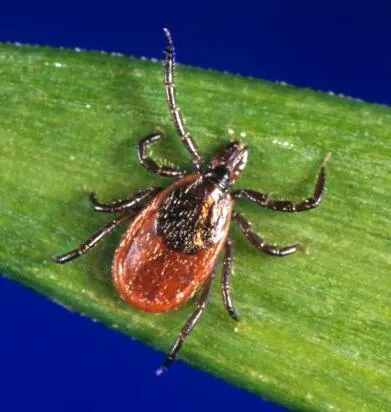

Two newer ticks are on record here too. CAES and DEEP found the first established, reproducing lone star tick population in Connecticut at Manresa Island in South Norwalk in 2017. CAES later reported the first established Asian longhorned tick population in Fairfield County in September 2020.
Human case counts are reported differently from tick counts. CDC’s public data put Fairfield County at 503 Lyme cases in 2022. From the following year CDC reports Connecticut by planning region. It counted 534 cases in the Western Connecticut planning region and 184 in the Greater Bridgeport planning region, according to the CDC Lyme disease dataset. The point for a homeowner is simpler: ticks here are common, many carry disease, and most bites happen close to home.
Why is my yard full of ticks? Where they live
Ticks are not spread evenly across a property. The CAES Tick Management Handbook reports that 67% of blacklegged ticks sampled were in densely wooded areas and 22% in the unkept edge between woods and open ground. Only 9% were in ornamental plantings and 2% on lawns. Within lawns, 82% were within 3 yards of the lawn’s edge, especially along woods, stone walls and garden beds.
That pattern drives every sensible tick plan. The high-risk zone is the woods, the brushy edge, groundcover such as pachysandra and the strip of lawn next to them. The aim is to make the parts of the yard your family actually uses a lower-tick area, rather than treating the whole lot. Think of the paths, the play set, the garden and the route to the mailbox.
Barrier sprays: what a certified applicator does
A barrier or perimeter spray is an acaricide (a pesticide that kills ticks) applied to tick habitat around the areas people use. The CAES handbook calls this “the most effective way to reduce ticks, particularly when combined with the landscaping changes.” Here is how it describes a good application:
- Timing. One application in May or early June for nymphs, with an optional October spray for adults, as set out above.
- Placement. The edges where lawn meets woods, stone walls or ornamental plantings, and several yards into bordering woods. Also groundcover near the house and walkways, and the perimeter of play areas, gardens, storage areas and paths. In parks and school fields the handbook says spraying open fields and lawns is not necessary.
- What to avoid. Herb, vegetable and butterfly gardens. Most tick products are toxic to bees, and the handbook warns that even organic pesticides are toxic to fish and aquatic invertebrates. It advises no spraying within 25 feet of wetlands, ponds and streams or within 100 feet of coastal marshes.
- Conditions. No spraying on windy days or right before rain, and no watering the lawn right after a liquid application.
- Reentry. Keep family members and pets, “especially cats”, off the treated area for 12 to 24 hours or for the label’s reentry interval. That generally means until the spray has dried.
A good applicator should also explain which product they will use and why. The handbook notes that most products used for area tick control are synthetic pyrethroids. Some concentrated products are restricted to commercial applicators because of their effect on aquatic life.
Host-targeted methods, tick tubes and bait boxes
Ticks get their blood meals from animals, so another approach treats the hosts instead of the yard. CAES groups these as “host-targeted acaricides” and “management of host abundance.” The research behind them is mixed, and the handbook is frank about it:
- Tick tubes for mice. Cardboard tubes of permethrin-treated cotton are meant to be carried off by white-footed mice as nesting material. CAES reports that evaluations in Connecticut and New York “failed to show any reduction” in infected nymphs over three years on sites of about 4 acres or less. A larger Massachusetts study did see fewer ticks.
- Rodent bait boxes. Boxes that dab fipronil on mice worked on Mason’s Island, Connecticut, but the commercial product the handbook describes is “no longer being manufactured.”
- Deer feeding stations. The “4-Poster” station treats deer with an acaricide as they feed. The handbook says it is most practical as part of a neighborhood or community program, not on one lot.
- Deer fencing. Fencing is “the most effective method to control access by deer to a property.” It does not stop mice and chipmunks, which carry young ticks, so it works best on larger, enclosed areas.
Host-targeted methods can be part of a plan, especially on large or wooded lots, but none of them is a quick fix. Ask any company that offers them what result to expect, and over how many seasons.
Landscaping and lower-toxicity options
The CAES handbook’s landscape steps take no pesticide at all, and they make any spray work better:
- Keep grass mowed, and clear leaf litter, brush and weeds at the lawn’s edge and around stone walls and woodpiles.
- Put a 3-foot or wider border of wood chips, mulch or gravel between the lawn and woods or stone walls.
- Move swing sets and sandboxes away from the woods’ edge, and set them on wood chips or mulch.
- Move firewood and bird feeders away from the house, and trim branches to let in sunlight.
- Keep dogs and cats out of the woods.
The handbook is also clear about the limits: landscaping “alone may not reduce disease incidence,” because one undetected bite from an infected tick is enough.
For people who want lower-toxicity products, the handbook’s findings are useful. Natural pyrethrin with the synergist piperonyl butoxide gave “limited tick control” in residential trials. Pyrethrin combined with insecticidal soap or with silicon dioxide (a desiccant made from diatomaceous earth) did better. These products have little residual activity, so at least two applications may be needed. The handbook also describes insect-killing fungi such as Metarhizium anisopliae as “a promising approach” that controlled ticks in small trials. The handbook dates from 2007, so ask an applicator whether a registered fungal product is available now.
Two cautions apply to every option. First, “organic” does not mean exempt: DEEP’s certification brochure says anyone who applies pesticides commercially, “including organic pesticides,” must be certified. Second, no pesticide is described as safe in this guide. EPA treats safety claims on pesticide labeling, such as calling a product “safe”, as false or misleading under 40 CFR 156.10. Ask for the label and the reentry time instead.
Connecticut rules on tick spraying
Who may spray for hire
Anyone who applies pesticides for hire in Connecticut needs a DEEP certificate. The business needs a DEEP registration, which it must print on contracts, vehicles and ads (Connecticut General Statutes, chapter 441). DEEP’s certification category descriptions place tick control in category 3A, Ornamental and Turf. The same document notes that mosquito category 7F does not cover ticks. Ask to see the supervisor’s 3A certification and the company’s registration number.
Notice before the spray, signs after it
Before agreeing to apply a pesticide, the company must give you the label details (CGS 22a-66a, in the same chapter). That means the product name, its EPA registration number, the active ingredients, the signal word, the precautionary statements and reentry information, plus notice of the neighbor registry. Some neighbors have asked for notice through DEEP’s registry. If the application is within 100 yards of the property line, the company must notify any such abutting owner or tenant first. It makes at least two attempts no later than 24 hours ahead and leaves a door notice if those fail. To be on the list for next year, an abutting neighbor submits DEEP’s pre-notification form by December 31.
The yellow lawn signs are a legal requirement too. Outdoor applications within 100 yards of a property line need a sign “at any conspicuous point of entry.” Commercial applicators also post one every 150 feet of road frontage (CGS 22a-66a(c)). Under DEEP’s compiled regulations, the sign is black on bright yellow, reads “PESTICIDE APPLICATION” and must stay up for 24 hours.
Schools, daycares and playgrounds
Connecticut bans lawn care pesticides on the grounds of preschools and schools with students in grade eight or lower (CGS 10-231b). The exception is an emergency application approved by the local health director, DPH, DEEP or the school superintendent. Child care facilities have a similar ban, and their emergency exception names “mosquitoes, ticks and stinging insects” and rules out restricted-use pesticides (CGS 19a-79a). Municipal playgrounds are covered by CGS 22a-66m, which bans lawn care pesticides there. It allows an emergency application “to eliminate an immediate threat to human health, including, but not limited to, the elimination of mosquitoes, ticks and stinging insects.” The town’s controlling authority must find it necessary, and no restricted-use pesticide may be involved. Before any pesticide application on a playground, the town posts a notice on its website at least 24 hours ahead “if the situation permits.” For an emergency, notice comes “as soon as practicable.” Under that section, “lawn care pesticide” does not include microbial or biochemical pesticides, horticultural soaps and oils without synthetic pesticides, or minimum-risk 25(b) products.
Equipment that is banned
Automatic residential misting equipment is banned in Connecticut (CGS 22a-66n, in chapter 441). A company should never offer to install one.
Neonicotinoids from October 2027
From October 1, 2027, neonicotinoid pesticides may be used only where DEEP finds no other effective option, with exemptions that include trees and ornamental shrubbery (Public Act 25-33). Most tick sprays are pyrethroids, but if a lawn plan combines tick and grub products, ask what changes in 2027.
Mosquito spraying: same crews, same Connecticut rules
Many companies that spray yards for ticks also sell mosquito treatment, but Connecticut treats it as separate work. DEEP’s certification category descriptions put mosquitoes in category 7F, Mosquito and Biting Flies, and add that “Tick control is category 3A.” If one company offers both, ask which categories its supervisor holds. The label, neighbor-notice and sign rules above apply to a mosquito spray just as they do to a tick spray. Automatic residential misting equipment is banned in Connecticut (CGS 22a-66n).
Standing water comes before any spray. EPA and CDC’s integrated approach to mosquito control starts by removing breeding sites. Clear standing water from gutters, old tires, buckets and toys. Empty and change the water in birdbaths, fountains, wading pools, rain barrels and plant trays “at least once a week.”
Timing matters here too. Connecticut’s 2026 West Nile virus release says most human infections come from bites “during July through September.” In it, CAES reported the “highest levels of virus activity in mosquitoes from Fairfield and New Haven counties.” This Old House lists mosquito treatment at $350 to $500 (national, as of March 2026).
How much does tick control cost?
One national cost guide prices tick treatment; none prices a season of yard spraying. Each figure is shown with its publisher and date, and none is a Connecticut price.
| What is priced | Figure | Source |
|---|---|---|
| Ticks | $150 to $300 | Bob Vila, national, as of September 2024 |
| One pest control visit (any pest) | $50 to $500, national average $171 | This Old House, national, as of March 2026 |
| A season of yard tick spraying, or a per-acre price | This guide found no published figure |
This Old House also lists mosquito treatment at $350 to $500, a different service covered above.
What drives a tick quote, based on what the CAES handbook says a proper application involves:
- How much edge there is. A long border with woods or stone walls means more area to treat than a fenced, open lawn.
- How many visits. One late-spring spray, or that plus an October spray for adults.
- Which product. The handbook says pyrethrin and soap products have little residual activity and may need two or more applications.
- Host-targeted add-ons, such as deer stations or rodent devices, priced separately.
Get the plan in writing: the product, the dates, the areas to be treated and the reentry interval. Our guide to pest control costs in Connecticut collects the sourced national ranges for other pests.
How to choose a tick control company
- Confirm the paperwork. A DEEP business registration number on the contract and a supervisor certified in category 3A.
- Ask about timing. A company that sprays for nymphs in May or early June follows the CAES schedule. One that pushes monthly sprays from March should explain why.
- Ask where they will spray. The answer should be the edges, walls and groundcover the handbook describes, not the whole lawn.
- Ask for the label information before you sign. The law requires it; a good company offers it.
- Ask about water, wells and bees. The handbook advises keeping sprays away from wetlands, wellheads and areas with foraging bees.
- Be wary of “safe” claims. EPA treats them as false or misleading.
This guide does not recommend or rank companies.
Tick control in six Fairfield County towns
- Westport, with its health district, sent CAES more ticks than any other town in the county: 277 in 2025. Of the ticks tested, 33% carried Lyme bacteria, according to the 2025 tick testing summary. The Aspetuck Health District forwards ticks for a $10 processing charge. See ticks and pests in Westport.
- Stamford sent 211 ticks in 2025, and the Lyme-positive share of tested ticks rose from 14% in 2024 to 32%. See tick control and pests in Stamford.
- Fairfield’s health department sends ticks to CAES for a $5.00 fee. See pest control in Fairfield.
- Greenwich shows only 6 CAES submissions in 2025 because the town runs its own fee-based tick lab, not because it has few ticks. See ticks and pests in Greenwich.
- Trumbull’s Health Department takes ticks for CAES testing for $5, through a locked drop box by its front entrance that staff check daily. Trumbull sent 161 ticks in 2025, and 35% of the 113 tested carried Lyme bacteria. See Trumbull’s tick drop box and yard pests.
- Shelton belongs to the Naugatuck Valley Health District, which forwards ticks to CAES for $5 each. CAES counts those ticks under Seymour, where the district is based, so the 40 listed for Shelton in 2025 are only the ones residents sent themselves. See the Shelton health district route.
Norwalk, home of the state’s first established lone star tick population, has its own page too: pests in Norwalk. For the month-by-month picture, read the tick season guide for Fairfield County. Mice carry young ticks and also get into houses; see mouse and rodent control.
What should you do if a tick bites you?
Spraying lowers the odds, but it does not remove them. Save any tick that bit someone in a crush-proof container or sealed bag, dry, and send it to CAES through your town health department or by mail. CAES identifies and tests it at no cost for identification or testing, though your town may charge a handling fee. Talk to your doctor about the bite as well, because a test result tells you what the tick carried, not whether you are infected.
Sources
- CAES, Tick Management Handbook (Bulletin 1010, 2007): https://portal.ct.gov/-/media/caes/documents/publications/bulletins/b1010pdf
- CAES, Summary of Tick Testing Results, 2025: https://portal.ct.gov/caes/-/media/caes/documents/tick_testing/summary-of-tick-testing-results-2025-readable-20.pdf
- CAES, press release on 2025 active tick surveillance results (March 23, 2026): https://portal.ct.gov/caes/agency-press-release-results-page/2026-3-23
- CAES, 2025 Summary of Active Tick Surveillance Testing Results: https://portal.ct.gov/-/media/caes/tick-office/active-tick-surveillance-program/2025/2025-summary-of-active-tick-surveillance-testing-results.pdf
- CAES and DEEP, lone star tick press release (2017): https://portal.ct.gov/-/media/caes/documents/publications/press_releases/2017/caesdeeppressreleaselonestartickspdf.pdf
- CAES, Asian longhorned tick press release (September 2020), hosted by the Town of Newtown: https://www.newtown-ct.gov/sites/g/files/vyhlif12216/f/uploads/caes_press_release_asian_long_horned_tick_9.24.2020.pdf
- CDC, Lyme disease public-use aggregated data: https://data.cdc.gov/National-Center-for-Emerging-and-Zoonotic-Infectio/Lyme-disease-public-use-aggregated-data-with-geogr/x5j9-wybp
- CAES, Information on Submitting Ticks: https://portal.ct.gov/caes/tick-office/tick-office/information-on-submitting-ticks
- CT DEEP, pesticide certification brochure: https://portal.ct.gov/-/media/deep/pesticides/certification/education/brochureindustry.pdf
- CT DEEP, commercial applicator certification category descriptions: https://portal.ct.gov/-/media/deep/pesticides/certification/supervisor/catinfopdf.pdf
- CT DEEP, pre-notification of pesticide application to abutting property: https://portal.ct.gov/deep/pesticides/pre-notification-of-pesticide-application-to-abutting-property
- CT DEEP, compilation of pesticide statutes and regulations: https://portal.ct.gov/-/media/deep/pesticides/certification/supervisor/statsandregspdf.pdf
- eCFR, 40 CFR 156.10: https://www.ecfr.gov/current/title-40/part-156/section-156.10
- Connecticut General Statutes, chapter 441: https://www.cga.ct.gov/current/pub/chap_441.htm
- Connecticut General Statutes, chapter 170 (section 10-231b): https://www.cga.ct.gov/current/pub/chap_170.htm
- Connecticut General Statutes, chapter 368a (section 19a-79a): https://www.cga.ct.gov/current/pub/chap_368a.htm
- Connecticut Public Act 25-33: https://www.cga.ct.gov/2025/ACT/PA/PDF/2025PA-00033-R00SB-00009-PA.PDF
- This Old House, pest control cost (national, updated March 2026): https://www.thisoldhouse.com/pest-control/pest-control-cost
- Aspetuck Health District, tick submissions: https://aspetuckhd.org/rabies-tick-submissions/
- Town of Fairfield, ticks: https://fairfieldct.gov/service/health_department/information_on_tick_borne_diseases.php
- Town of Greenwich, Laboratory: https://www.greenwichct.gov/660/Laboratory
- Bob Vila, How Much Does Pest Control Cost? (national, updated September 5, 2024): https://www.bobvila.com/articles/pest-control-cost/
- EPA, Success in Mosquito Control: An Integrated Approach: https://www.epa.gov/mosquitocontrol/success-mosquito-control-integrated-approach
- State of Connecticut, State Reports Expansion of West Nile Virus (2026): https://portal.ct.gov/mosquito/press-room/2026-press-releases/state-reports-expansion-of-west-nile-virus
- Town of Trumbull, Ticks: https://www.trumbull-ct.gov/180/Ticks
- Naugatuck Valley Health District, Environmental Health: https://www.nvhd.org/environmental-health/
Frequently asked questions
Is it worth spraying your yard for ticks?
It can be, if the spray is aimed at the right spots. The CAES Tick Management Handbook calls acaricides the most effective way to reduce ticks, especially combined with landscaping, and found 82% of lawn ticks within 3 yards of the lawn edge. Spraying does not replace tick checks or saving a tick that bit someone.
When should I start spraying for ticks?
In Connecticut, the CAES handbook advises one application in May or early June, aimed at blacklegged tick nymphs, the stage most likely to spread Lyme disease. An October application can target adult ticks. Spraying in March for nymphs is early: they peak in May, June and July.
How long does tick spraying last?
CAES does not give a number of weeks. Its handbook says one application of most ornamental and turf insecticides gives 85 to 90% or better control with some residual activity, so repeat sprays are rarely needed. Pyrethrin and soap products have little residual activity and may need at least two applications.
How much does an exterminator cost for ticks?
Bob Vila puts tick treatment at $150 to $300 (national, as of September 2024). This guide found no published price for a season of yard spraying. This Old House puts a general pest control visit at $50 to $500, averaging $171 (national, as of March 2026). Woodland edge and the number of visits drive a tick quote.
Can a company spray for ticks near a school or daycare in Connecticut?
Not on the grounds, as a rule. Connecticut bans lawn care pesticides on the grounds of preschools, schools up to grade eight, child care facilities and municipal playgrounds. Emergency applications are allowed, and the child care law names ticks among the pests an emergency can cover.
Do I have to tell my neighbors before a tick spray?
The company does, for neighbors who asked. Under Connecticut law, an abutting owner or tenant who joined DEEP's registry must be notified before an application within 100 yards of the property line. For outdoor spraying that close to the line, yellow signs go up at any conspicuous point of entry, and every 150 feet of road frontage for a commercial applicator, for 24 hours. Registry forms are due December 31.