Pest control and exterminators in Norwalk, CT
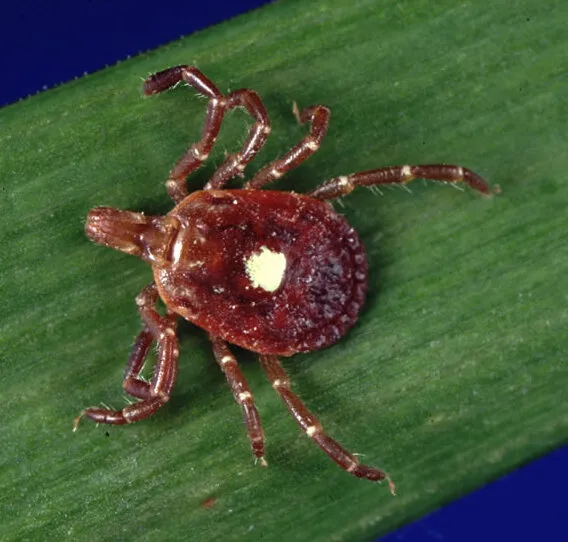
Norwalk, CT is where Connecticut’s first established lone star tick population turned up, on Manresa Island in South Norwalk in 2017. Blacklegged ticks are still the everyday concern: residents sent CAES 175 of them in 2025, and 31% of those tested carried Lyme bacteria, about double the 2024 share. The city health department forwards resident ticks free.
Found a tick or a nest right now?
- Tick bite: save the tick. Save it dry in a sealed bag; send it to CAES for free testing through your health department or by mail. See a doctor if a rash or fever follows. Norwalk Health Department, 137 East Avenue, sends ticks to CAES: free for residents, $15 for non-residents. details about tick drop-off in Norwalk
- Nest by the door: keep back. Keep people and pets away from the nest; trouble breathing or hives all over need medical care right away.
- Droppings: air the room, then wet-clean. Air the room for 30 minutes, wear gloves and soak droppings with disinfectant or bleach before wiping; never sweep or vacuum them.
- Suspected bed bugs: report it. Renters tell the landlord, who has five business days to inspect; homeowners ask a DEEP-registered pest control company to inspect.
Hiring an exterminator in Norwalk
- Check its DEEP registration.
- Get products, labels and notices in writing.
- Compare two written quotes.
- Before paying for mosquito work, note that Norwalk's Health Department already oversees larvicide in catch basins and stagnant waterways every summer.
Pest control services in Norwalk
After a tick bite in Norwalk, the first call is the city, not a pest company. Take the tick, dry and sealed in a bag or small container, to the Norwalk Health Department on East Avenue; it forwards ticks to the Connecticut Agricultural Experiment Station (CAES) for identification and testing, and the result comes by mail. Note where the bite probably happened. A tick picked up near the water in South Norwalk or Rowayton could be a lone star tick, so say where you found it when you hand it in.
The other pests Norwalk households report are the ones that come indoors: brown marmorated stink bugs looking for winter shelter, and mice. Neither calls for panic. Stink bugs are a nuisance that does not bite, and mice are a sealing job first. For a rental unit, tell the landlord in writing; the Health Department’s site also covers the city’s Certificate of Apartment Occupancy and tenement house registration.
When a pesticide is needed, Connecticut requires a certified applicator working for a business with a DEEP registration, and the registration number must appear on the company’s written contracts, vehicles and newspaper, billboard and directory ads under CGS 22a-66c. This site neither does the work nor names firms; who runs it is on its about page. The guides, each with its Norwalk thread:
- Tick control for Norwalk yards: Norwalk residents sent CAES 175 ticks in 2025, and a tick picked up near the South Norwalk shore could be a lone star tick.
- Mouse and rat control in Norwalk homes: 41.8% of Norwalk homes predate 1960, with the pipe and vent gaps DEEP tells owners to seal.
- Carpenter ants in Norwalk’s older houses: a colony indoors suggests water-damaged wood, and the guide to carpenter ants versus termites covers telling them apart.
- Termite control in Norwalk, plus a termite inspection before buying in Norwalk: 18.9% of the city’s homes date from before 1940.
- Bed bugs in Norwalk rentals: 44.4% of occupied homes are rented, and the Health Department handles the city’s Certificate of Apartment Occupancy.
- Cockroach control for Norwalk kitchens: Norwalk has no cockroach data; CAES’s statewide fact sheet says brown-banded cockroaches are among the four species that regularly invade homes in the Northeast.
- Wasp and hornet nests on Norwalk properties: in Norwalk, a nest that needs a pesticide must be removed by a certified commercial applicator working for a DEEP-registered business, under CGS 22a-54; CAES’s yellowjacket fact sheet suggests a professional for hard-to-reach nests, especially inside buildings. The city keeps no nest records of its own.
- Commercial pest control for Norwalk restaurants and apartment buildings: the city Health Department, which handles tenement house registration, is the local office for building-wide problems.
Nearby towns: Westport, which sends CAES more ticks than any other Fairfield County town, borders Norwalk to the east; Darien, the other early stink bug town, is next to the west; and Stamford, with three West Nile traps, is one town farther.
Costs, choosing a company and rentals
Average treatment for a standard infestation (national): $171 (This Old House, March 2026).
Pest calendar
| Pest | Peak months | January | February | March | April | May | June | July | August | September | October (this month) | November | December |
|---|---|---|---|---|---|---|---|---|---|---|---|---|---|
| Blacklegged tick nymphs, 1 | May–Jul | none reported | none reported | none reported | none reported | peak | peak | peak | active | active | none reported | none reported | none reported |
| Blacklegged tick adults, 1 | Mar–Apr, Oct–Nov | active | active | peak | peak | active | none reported | none reported | none reported | none reported | peak | peak | active |
| Mosquitoes (West Nile virus risk), 2 | Jul–Sep | none reported | none reported | none reported | none reported | none reported | active | peak | peak | peak | active | none reported | none reported |
- Peak: the busiest months
- Active
- None reported
- October (this month)
Why pests in Norwalk include the lone star tick
Where in Norwalk was Connecticut’s first lone star tick colony found?
On Manresa Island in South Norwalk. In September 2017, CAES and DEEP found a “heavy population” of lone star ticks there, the “first known established reproducing population in the State,” according to their joint press release. A population that breeds in place is different from a stray tick carried in on a person or a pet: it can persist from year to year. The same release said “The majority of lone star tick submissions are from lower Fairfield County.” The release dates from 2017, and this guide found no later CAES count for the island, so treat it as the record of where the species took hold rather than a current map. If you live or walk near the Norwalk shoreline and find one, save it like any other tick and say where you found it when you submit it to the Health Department.

Why do Norwalk ticks carry so much Borrelia miyamotoi?
Norwalk had more ticks positive for Borrelia miyamotoi in 2025 than any other town this guide covers, and no published source explains why. CAES tested 93 Norwalk ticks that year and found the bacterium in 8 of them (9%), according to its 2025 tick testing summary. B. miyamotoi causes hard tick relapsing fever, an illness spread by the same blacklegged tick that carries Lyme disease. In the same Norwalk ticks it turned up far less often than the Lyme bacterium, and a positive tick does not mean the person it bit is infected. Treat it as one more reason to submit the tick rather than throw it away, and mention any fever after a bite to a doctor. The city’s own tick illness page lists babesiosis, anaplasmosis, ehrlichiosis and Powassan virus alongside Lyme.
Why do stink bugs show up on Norwalk houses in the fall?
Stink bugs gather on Norwalk houses in the fall looking for a place to spend the winter, and Norwalk was one of the first places in the state they were found. When CAES confirmed the brown marmorated stink bug in Connecticut on December 2, 2010, the first specimens came from towns including Norwalk and Darien, according to its press release. The release says the insect seeks shelter in homes and other buildings in the fall and does “not bite or sting.” CAES announced it as a new agricultural pest, so the bigger losses are to crops and fruit trees, not to houses. For a Norwalk homeowner, a cluster of stink bugs in an attic or behind a window frame is a nuisance and an entry-point problem, not a health risk, and nothing about it calls for an emergency visit. The fall invaders guide covers what works once they are inside.
Do Norwalk’s older homes let in more mice and carpenter ants?
Older homes give both more ways in. Norwalk’s median year built is 1967, and 41.8% of its homes were built before 1960, including 18.9% before 1940, by the Census Bureau’s year-built counts. CT DEEP’s rodent management page lists the gaps to seal: around pipes, utility conduit, drains and vents, using cement, steel wool, metal flashing or 1/4-inch hardware cloth. The CAES Tick Management Handbook describes white-footed mice nesting in stone walls and stacked firewood and says they “may readily enter and nest in buildings, especially during the winter months.” Carpenter ants follow moisture: CAES’s carpenter ant fact sheet says a colony in a house is evidence there may be water-damaged wood, often around porches, chimneys and tubs.
What share of Norwalk households fall under the rental bed bug law?
A little under half: 44.4% of Norwalk’s occupied homes are rented, per the Census Bureau’s renter and owner figures, and only 45.4% of housing units are detached single-family houses, by its units-in-structure count. That puts Norwalk between the apartment-heavy cities and the single-family suburbs. Connecticut’s bed bug statute, CGS 47a-7a, applies to any rental unit that is not a detached single-family house, so a two-family in East Norwalk and a condominium rented out by its owner are both covered. A tenant who suspects bed bugs must tell the landlord promptly. The landlord then inspects, or sends a qualified inspector, and the inspector can be a certified applicator, a local health department official or a certified detection-dog team. Renting out a detached house is different: the statute does not reach it, so read the lease.
Ticks and mosquitoes in Norwalk
Norwalk residents sent CAES 175 blacklegged ticks in 2025. Of the 93 that could be tested, 29 (31%) carried the Lyme bacterium, according to the 2025 summary. A year earlier, 146 were identified and 13 of 87 tested (15%) were positive, per the 2024 summary. The jump from 15% to 31% is a change in the ticks people sent in, not a survey of the city’s woods, but it is large. Since 2023, CDC’s Lyme dataset has counted people by planning region; Norwalk’s, Western Connecticut, had 534 cases in 2023. In the 2025 field survey described in a CAES press release, 68% of adult females collected in this area carried Lyme bacteria, the highest rate anywhere in the state.
CAES runs two mosquito traps in Norwalk, at Cranbury Park and Rowayton School. In 2025 Rowayton School had 6 West Nile virus-positive samples and Cranbury Park 1, a total of 7, per the 2025 final summary. By October 13, 2026, Rowayton School had 3 and Cranbury Park none, per the 2026 summary. Every positive is one pooled batch from one of the two traps. Norwalk’s row is in the CSV of all 23 Fairfield County towns, and the tick season guide reads the table.
Exterminator prices and registration checks for Norwalk
How much does wasp or hornet nest removal cost in Norwalk?
There is no Norwalk or Connecticut price on record; the published ranges are national. This Old House lists wasps at $300 to $700 (national data, as of March 2026), and Bob Vila gives a wider $100 to $1,300 (national, as of September 2024). Height, the nest’s position inside a wall and the number of nests move the price. For mosquitoes, check what the city already does: Norwalk’s Health Department oversees larvicide in catch basins and stagnant waterways each summer. The cost guide lists other pests.
How can I tell if a Norwalk pest company is allowed to do the work?
Ask two questions. First, which certified applicator will come: CGS 22a-61(d) makes it unlawful for anyone not certified as a commercial applicator even to advertise pesticide work. Second, what is the business’s DEEP registration number, which must be on the Norwalk contract; DEEP’s lookup instructions explain the free eLicense search.
Offices to call in Norwalk
- Norwalk Health Department: 137 East Avenue, Norwalk, CT 06851, 203-854-7776. Its quick links include the Certificate of Apartment Occupancy and tenement house registration.
- Tick testing: the Health Department’s lab sends ticks to CAES, which identifies them and tests for Lyme, babesiosis and anaplasmosis. According to the city’s tick page, testing is free for Norwalk residents and costs $15 for non-residents, results are mailed, and testing can take up to 7 weeks. Call 203-854-7776 with questions.
- Mosquitoes: the Health Department’s FAQ says it oversees a larvicide program that treats catch basins and stagnant waterways every summer. Standing water on your own property is yours to empty.
- CAES Tick Testing Laboratory: skipping the city route is possible too: post the tick to the New Haven lab yourself, free, following its submission page; the lab tests a tick only if it has fed on someone.
Sources
- CAES yellowjackets
- This Old House, pest control cost (national)
- Bob Vila, pest control cost (national)
- CT DEEP, looking up a license
- CGS chapter 441
- CAES and DEEP, press release on lone star ticks at Manresa Island (2017)
- CAES ticks 2025, Norwalk row
- City of Norwalk, ticks, Lyme and other tickborne illnesses
- CAES stink bugs (2010)
- Census median year built
- Census year built (B25034)
- DEEP rodent management
- CAES Tick Handbook
- CAES carpenter ants
- Census tenure (B25003)
- Census units (B25024)
- CGS chapter 830
- CAES ticks 2024, Norwalk row
- CDC Lyme data
- CAES field ticks (2026)
- CAES trap list (Norwalk)
- CAES mosquitoes 2025, Norwalk traps
- CAES mosquitoes 2026, Norwalk traps
- City of Norwalk, Health Department
- City of Norwalk, Health Department FAQs
- CAES tick submissions
Frequently asked questions
Are there lone star ticks in Connecticut?
Yes. In 2017 CAES and DEEP found a heavy population of lone star ticks on Manresa Island in South Norwalk, the first known established, reproducing population in the state. At the time, CAES said most lone star tick submissions came from the lower part of the county. Blacklegged ticks, which carry Lyme bacteria, are the ones CAES tests.
What do ticks hate most?
Open lawn away from woods. The CAES Tick Management Handbook found only 2% of blacklegged ticks on lawns, and most of those within 3 yards of the edge with woods, stone walls or plantings. A 3-foot or wider strip of wood chips, mulch or gravel between lawn and woods helps keep them off the yard.
Is tick testing free in Norwalk?
For Norwalk residents, yes. The Norwalk Health Department sends ticks to CAES at no cost to residents and charges $15 to non-residents, according to the city's tick page. Results are mailed and can take up to 7 weeks, so watch for symptoms and call a doctor rather than waiting for the result.
Does Norwalk spray for mosquitoes?
The city's program is larvicide: the Norwalk Health Department oversees a larvicide program that treats catch basins and stagnant waterways every summer. CAES traps at Rowayton School found West Nile virus-positive mosquito samples in both 2025 and 2026; the Cranbury Park trap was negative in 2026.